Racism is a common experience for many immigrants living in North Karelia. According to Aura Liski who is the project manager of the Rustik project racism occurs frequently in Finland although many people do not recognise their own behaviour as discriminatory. Immigrants reported incidents such as having dirty water thrown at them from a passing car, being called offensive names or being treated with visible hostility in everyday situations. Some expressed being shouted at in public and told that they do not belong in the country.
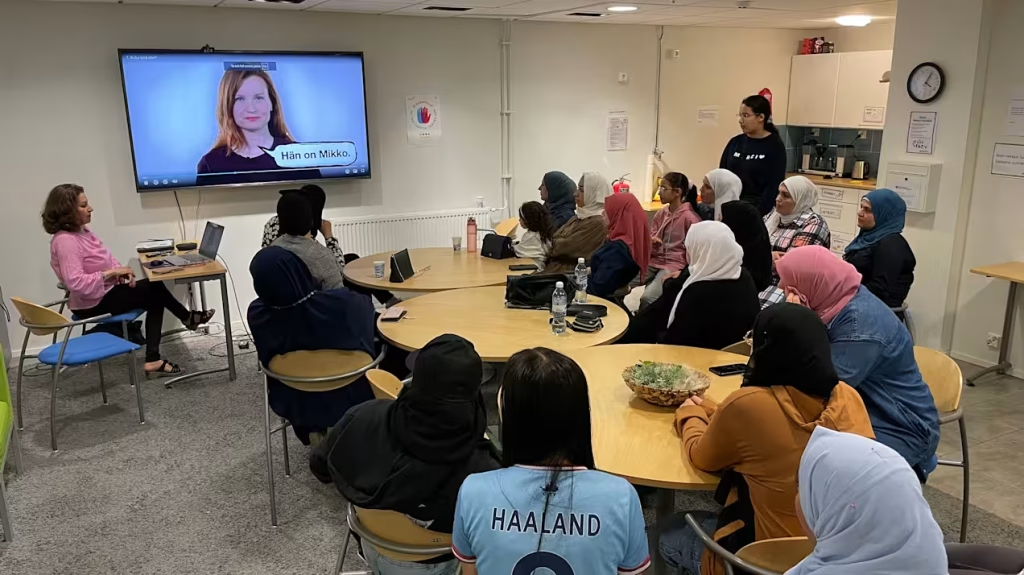
According to the survey results, young women face especially significant difficulties with integration. In 2024, Arab and Kurdish women who are part of the multicultural association Jomon came together for a group meeting in Joensuu. Photo Credits: Pauliina Tolvanen / Yle
Published: 19/12/25 | 17:14
These experiences were revealed through a large survey created by the Rustik project which examined how immigrants are integrating and what kinds of services they need. The survey was carried out by the Regional Council of North Karelia together with the Karelian Research Institute at the University of Eastern Finland. More than 1,200 immigrants took part in the survey which represents about 15 percent of all foreign language speakers in the region. According to Liski no similar regional study of this size has previously been conducted in Finland and there is no nationwide data that would allow for direct comparison.
Around 30 percent of those who responded said they had personally faced racism. The most common forms included verbal harassment, shouting and name calling in public places as well as discrimination when applying for jobs or at work. Many respondents shared their experiences in open responses describing how they were insulted, ignored or treated with suspicion.
A recruitment event for people with a foreign background was organized in Joensuu in 2023. Photo Credits: Pauliina Tolvanen / Yle
The survey showed that young immigrant women experience particular difficulties when trying to integrate. Only half of women under the age of 30 reported having Finnish friends and more than half said they do not take part in hobbies where they could meet Finns. Women who are not employed often have very limited contact with Finnish society and may lack basic knowledge about how it functions. Many young women said they do not know where to seek help if they become victims of crime, how to access public healthcare or what Kela benefits are available to them.
A demonstration against racism was held in Oulu in June 2024 after two people were stabbed in a shopping center within a short period of time. Photo Credits: Janne Körkkö / Yle
Language and background also affect how immigrants are treated. In 2024 the largest immigrant groups in North Karelia came from Ukraine, India and Russia. Russian speakers in particular reported being targeted because of their language. Some said they were labelled as Russian when speaking another language in public while others felt they were not trusted or were rejected by employers because of their background.
Many immigrants said they do not plan to stay in North Karelia permanently. Difficulties in finding work were the main reason for dissatisfaction and some felt that Finnish language requirements for jobs are stricter in the region than in larger cities. Because of this many see North Karelia as only a temporary place to live.
Project Manager Aura Liski presented the results of the integration survey in Joensuu. The results can be used by municipalities to develop integration services. Photo Credits: Siru Päivinen / Yle
Professionals note that integration alone is not enough. Immigrants also need to feel that they truly belong and can build a future in the region. According to Mari Nupponen from the Regional Council of North Karelia, settlement means feeling that a place is home and wanting to remain there. Without better support, reduced discrimination and improved opportunities many immigrants may continue to leave the region.